
*FREE SHIPPING ON ALL ORDERS OVER $200*
Pre-workout is a powdered drink mix you take 20 to 30 minutes before training. Its job is one session: more energy, sharper focus, and a better pump while you work out. The active ingredients in most formulas are caffeine for energy and focus, beta-alanine and citrulline for muscular endurance and blood flow, and a handful of supporting ingredients that vary by brand. What pre-workout does not do is build muscle by itself. It helps you show up and train harder today. The muscle comes from the training, the food, and the sleep that follow.
That is the honest answer we give at the counter at Xtreme Performance Nutrition in Gonzales. Everything below is what is actually in the tub, what the doses on the label mean, how to take it without wrecking your sleep, and who should skip it entirely.
A good pre-workout does three things, and you should be able to feel all three within about half an hour of drinking it:
What it cannot do: replace a meal, fix a bad night of sleep, or out-train a program you do not follow. If your protein is low and your sleep is four hours, pre-workout puts a loud engine in a car with no tires. Fix the basics first — our guide to how much protein you need per day covers the biggest one.
Labels differ, but most pre-workouts sold in our Pre-Workout and Energy section are built from the same short list. Here is what each common ingredient does, and the dose the research and the better labels tend to use:
| Ingredient | What it does | Typical full dose |
|---|---|---|
| Caffeine | Energy, focus, and perceived effort — hard sets feel more doable | About 150–350 mg per scoop, depending on the formula |
| Beta-alanine | Buffers acid buildup in muscle during high-rep work; causes the famous harmless tingles | About 3.2 g |
| L-citrulline | Supports nitric oxide and blood flow — the pump ingredient | About 6–8 g of pure citrulline (more if it is citrulline malate) |
| Betaine | Supports power output and hydration inside the muscle cell | About 2.5 g |
| Creatine (sometimes) | Supports strength over weeks of daily use — not a same-day ingredient | 3–5 g daily; many pre-workouts include little or none |
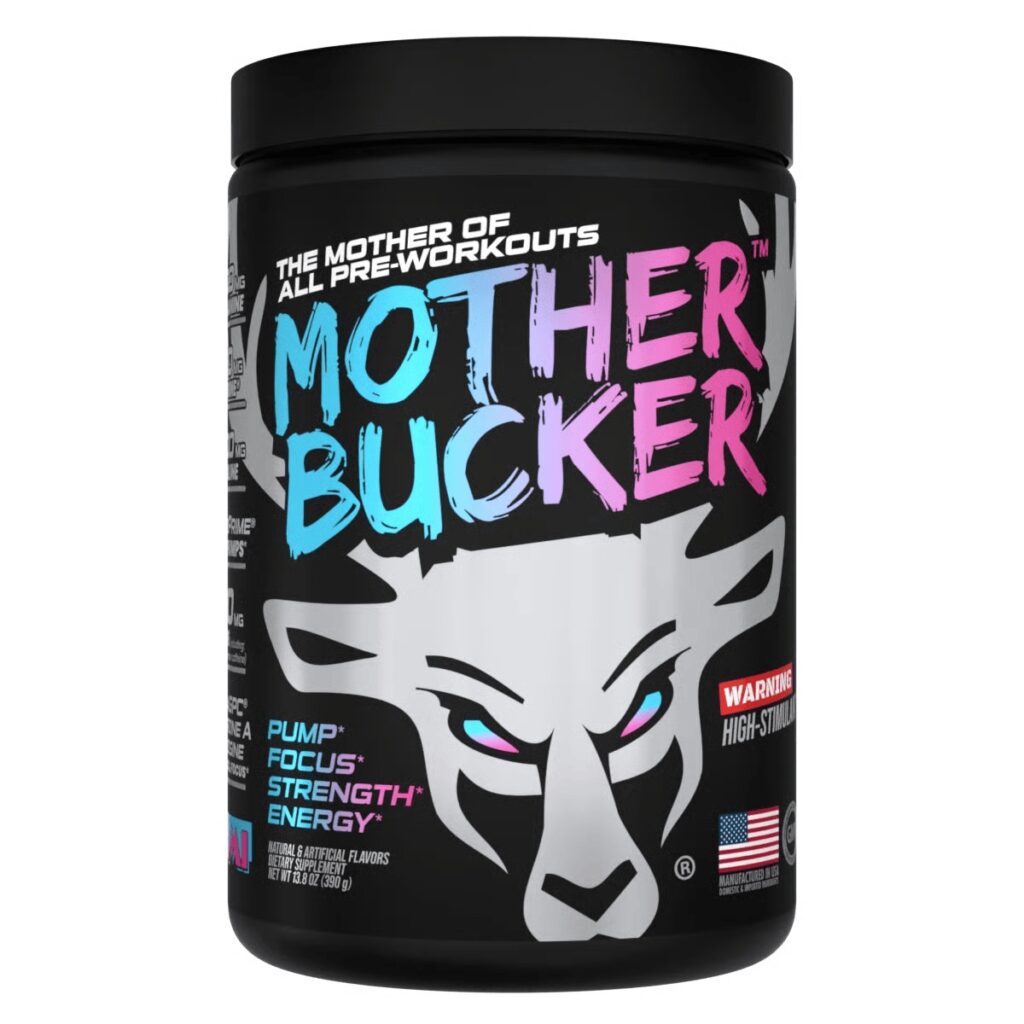
Two label lessons from that table. First, caffeine is the number to check before anything else. The U.S. Food and Drug Administration cites 400 milligrams of caffeine a day as an amount not generally associated with negative effects for healthy adults — and that is your whole day, coffee and energy drinks included. One scoop of a high-stimulant pre-workout can carry most of that by itself. Second, watch for proprietary blends that list ingredients without amounts. If a label hides its doses, you cannot tell whether you are getting 6 grams of citrulline or a sprinkle. The brands on our shelf — from everyday formulas like Bucked Up to high-stimulant options like Mother Bucker — print their facts panels, and we will read any of them with you before you buy.
About creatine: if your pre-workout includes it, fine, but do not count on it as your creatine source. Creatine works by daily saturation over weeks, including rest days when you take no pre-workout at all. Most people do better taking it separately and consistently — our creatine guide explains how and why.
Pre-workout is not hydration, and in a Gonzales summer that distinction matters. Caffeine gets the attention, but the real risk in August is showing up to train already behind on water and electrolytes after working or sweating all day. A pre-workout drink is one glass of water — it does not cover a day outside. Drink water through the day, and if you are a heavy sweater training in the heat, electrolytes are a separate line item, not something your pre-workout handles for you. Our electrolyte strategy for Louisiana heat lays out the sodium and timing side of that.
This article is education, not medical advice, and pre-workout is the supplement category where that matters most. Skip stimulant pre-workout, or talk to your doctor first, if you:
The tingles from beta-alanine, by contrast, are normal and fade within the session for most people. Jitters, nausea, and a crash an hour later usually mean the dose or the formula is wrong for you — often simply too much caffeine, too fast, on an empty stomach.
When someone asks us to pick their pre-workout, we ask three questions. How much caffeine do you already drink in a day? A two-coffee, one-energy-drink person needs a different formula than someone who rarely touches caffeine. When do you train? A 5 a.m. lifter and a 7 p.m. lifter should not leave with the same tub. What do you want to feel? Energy, pump, or both — pump-heavy and stim-heavy are different products. Bring us those three answers, in person or through our online shop, and the choice usually narrows to one or two tubs fast.
How long does pre-workout take to kick in?
Most people feel it in 20 to 30 minutes, which is why that is the window on nearly every label. Food in your stomach can slow it slightly; an empty stomach speeds it up and can add nausea.
How long does pre-workout last?
The training effect typically carries two to three hours, but caffeine itself stays in your system much longer — roughly half of it is still present about five hours after you drink it. That is why timing matters for sleep even when the workout energy feels gone.
Is pre-workout safe to take every day?
For healthy adults using a labeled dose and counting their total daily caffeine, occasional and regular use are both common. Daily high-stimulant use builds tolerance and can chip away at sleep, which costs more progress than the pre-workout adds. Cycling it to hard training days is the pattern we recommend most.
Does pre-workout break a fast or contain a lot of calories?
Most powders are low-calorie — often 5 to 25 calories a scoop — but labels vary, and some include sugars or ingredients that technically break a strict fast. Check the facts panel of the specific tub; we are happy to check it with you.
What is the difference between pre-workout and an energy drink?
An energy drink is basically caffeine and flavor. A pre-workout is caffeine plus training ingredients — citrulline for pump, beta-alanine for high-rep endurance — dosed for a workout. If all you need is to wake up, they overlap. If you want the pump and endurance ingredients, that is what pre-workout adds.
The best pre-workout is not the strongest one on the shelf. It is the one matched to your caffeine habits, your training time, and your sleep. That is exactly what a free nutrition consult with Coach L is for — tell us how you train and what you have tried, and we will point you at the right formula and dose, or honestly tell you to skip it and fix your sleep first.
Shop online at xp-nutrition.com/shop or visit us in person — we are happy to read labels with you before you spend a dollar.
Xtreme Performance Nutrition · 14639 Airline Hwy #103, Gonzales, LA · (225) 677-9876 · Free nutrition consult with Coach L
VISIT US
Xtreme Performance Nutrition
14639 Airline Hwy #103
Gonzales, LA 70737
14639 Airline Hwy #103
Gonzales, LA 70737
© 2023 Xtreme Performance Nutrition All Rights Reserved.
XTREME PERFORMANCE NUTRITION
14639 Airline Hwy #103, Gonzales, LA 70737
(225) 677-9876
Xtreme Performance Nutrition — Gonzales, Louisiana. Real people, real plans, no hype.